What is structured monitoring?
The goal of diabetes monitoring is to keep blood sugar levels in a healthy range. This can help reduce the risk for serious health complications.
Structured monitoring means checking your blood sugar readings at scheduled times and, in some cases, on specific days, based on your diabetes type and treatment plan. By following these set patterns of checks, you may be able to better:

Notice trends and patterns in your glucose numbers and make connections between your numbers and your habits, such as food, exercise or medications.

Understand potential causes for above range (also referred to as high or hyper) or below range (also referred to as low or hypo) readings.

Have an informed and meaningful conversation with your diabetes care team about your diabetes management.
How regularly you should check your blood sugar will vary depending on a number of factors, including your type of diabetes, medication type and your diabetes goals. Your doctor may have recommended a schedule to you, or you can understand some possible schedules by downloading one of our tailored templates.
How can I keep track of my readings?
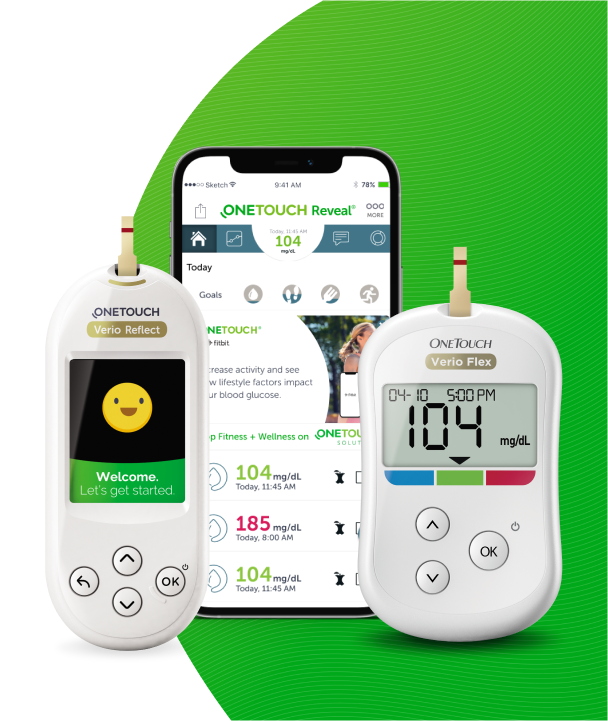
The easiest way to keep track of your readings is by using your OneTouch® meter connected to the OneTouch Reveal® mobile app. Using ColorSure® technology, the OneTouch Reveal® mobile app transforms data into quick visual snapshots that allow you to dive into personalized dashboards that connect your blood sugar with food, insulin and activity, as well as easily share your readings with your healthcare professional.
Track automatically
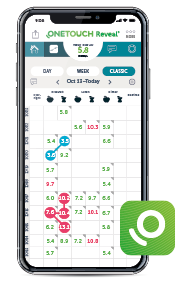
OneTouch Reveal® mobile app
When you use the OneTouch Verio Reflect® meter, the electronic logbook automatically logs and organizes your blood sugar results directly to your phone via Bluetooth.
Download the OneTouch Reveal mobile app for FREE:
Download the free app


Track on paper
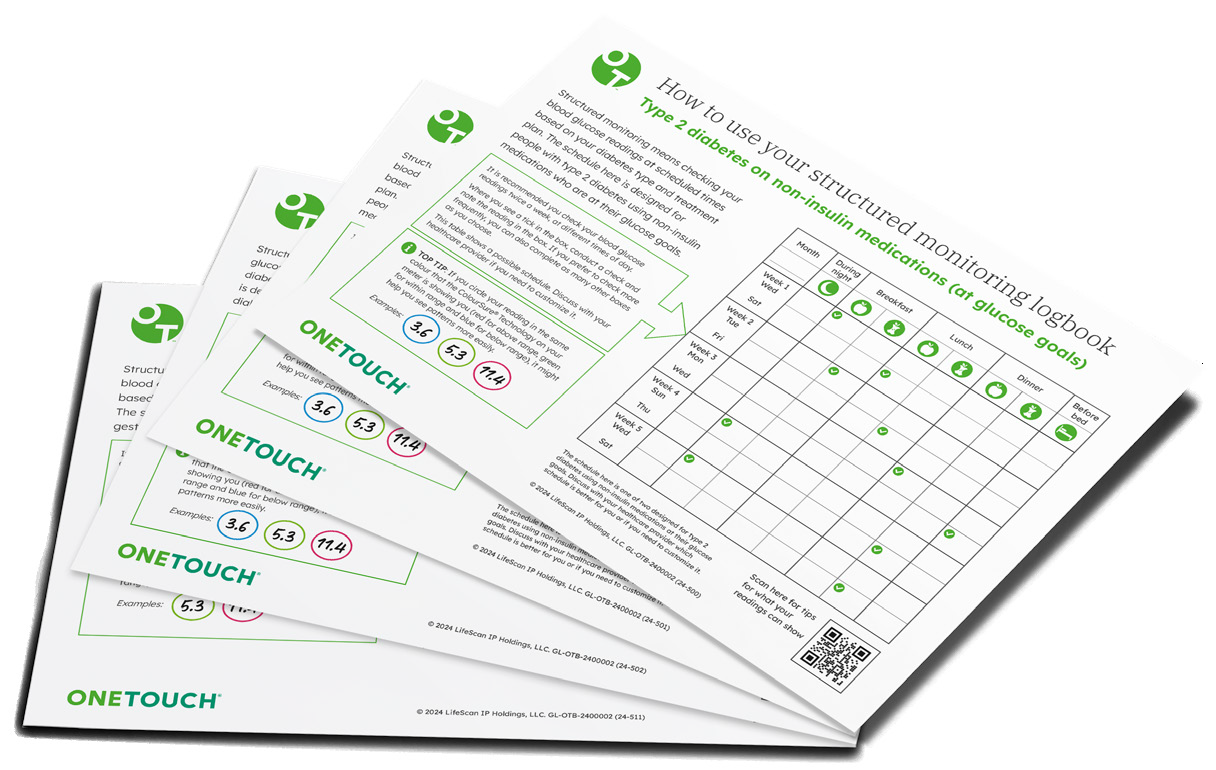
Free PDF download
If you prefer to use pen and paper to log your results manually, you can download and print your monitoring template.
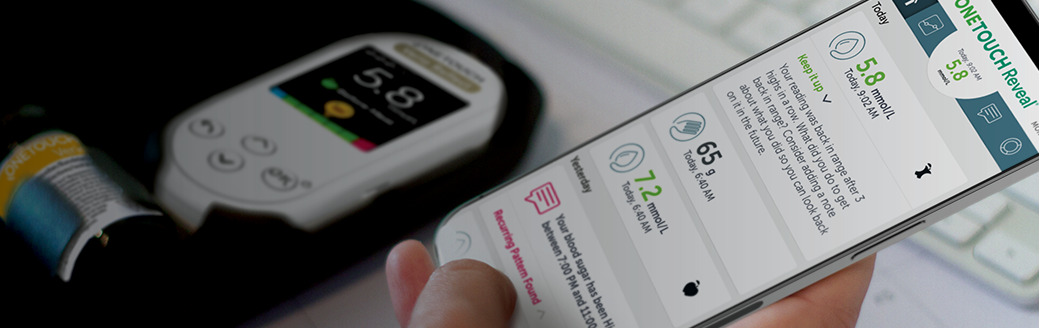

Use of the OneTouch Reveal® mobile app with a connected OneTouch® meter demonstrated significant improvements in readings in-range and lower mean blood sugar*
*Grady, M., Cameron, H. & Holt E. Sustained Improvements in Readings in - Range Using an Advanced Bluetooth® Connected Blood Sugar Meter and a Mobile Diabetes App: Real - World Evidence from more than 55,000 People with Diabetes. Diabetes Ther (2023). https://doi.org/10.1007/s13300-023-01415-3
Tips for what each reading can show:
- Effect of basal insulin dose
- Effect of non-insulin medication dose
- Impact of bedtime snack from the previous evening
- Effect of bolus insulin dose taken for the previous meal
- Effect of non-insulin medication dose
- Impact of events between meals (exercise, stress, snacks, etc.)
- Effect of bolus insulin taken for that specific meal
- Effect of non-insulin medication dose
- Impact of carbohydrate (carb) intake at that specific meal
- Effect of bolus insulin dose taken for dinner
- Effect of non-insulin medication dose
- Impact of carbohydrate (carb) intake at dinner or evening snack
- If you need a bedtime snack to prevent a low blood sugar during the night
- Effect of basal insulin dose
- Effect of non-insulin medication dose
- Impact of bedtime snack
Tips if readings are out of range:
(for people on intensive insulin therapy)
- Discuss your basal insulin dose with your healthcare provider
- Adjust bedtime snack
- Discuss your bolus insulin dose for the previous meal with your healthcare provider
- Consider the need for between meal snacking
- Add after meal glucose checks
- Discuss your bolus insulin for that specific meal with your healthcare provider
- Adjust carbohydrate (carb) intake at that specific meal
- Adjust bedtime snack
- Discuss your bolus insulin dose for dinner with your healthcare provider
- Add after dinner glucose checks
- Discuss your basal insulin dose with your healthcare provider
- Adjust bedtime snack
Treatment decisions should be based on the current numerical blood sugar reading and healthcare professional recommendations.
GL-OTB-2400007