Checking Your Blood Glucose
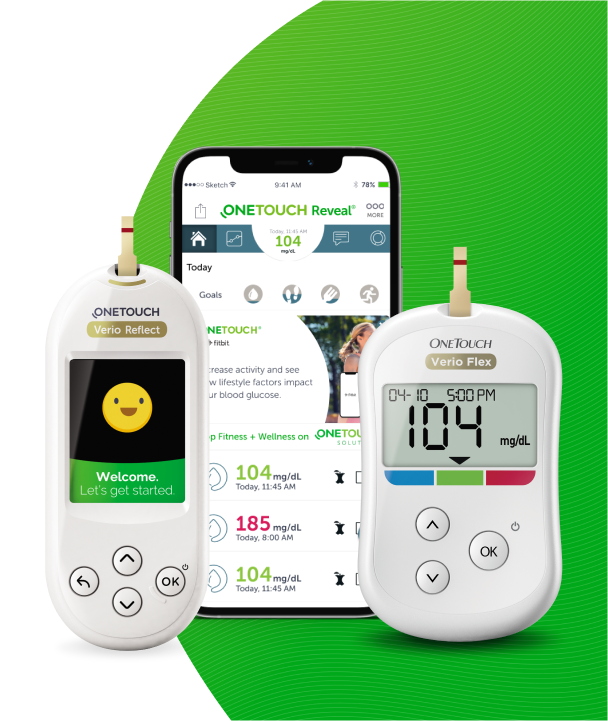
Checking your blood glucose, also known as Self-Monitoring of Blood Glucose (SMBG) or Blood Glucose Monitoring (BGM), is a method of checking how much glucose (or sugar) is in your blood using a blood glucose meter. Your doctor may also test your glucose from a blood sample that is checked in the lab.
Blood glucose targets for many non-pregnant adults*
| Before meal | 80-130 mg/dL |
|---|---|
| After meal | Less than 180 mg/dL |
Your doctor uses a lab test called an A1C (also known as HbA1C or Glycosylated Hemoglobin) test to see what your average blood glucose level has been over the most recent 2-3 months. This lab test gives you and your doctor an indication of how well you are responding to your treatment plan. The recommended goal for many non-pregnant adults with diabetes is to keep the A1C level below seven percent (7%). Your doctor can talk to you about the goal that is right for you. Children, pregnant women, and older individuals will have specific targets to be recommended by their physicians or healthcare professionals.
Another way you and your doctor may monitor your progress is to follow the percent of glucose readings that fall within your target range. A1C values and complications of diabetes also track well with the readings in range, which you can see on certain blood glucose meters.
The importance of self-monitoring
While your A1C lab test result reflects your average blood glucose over a period of time, it cannot show the effects of specific food choices and activities on your daily blood glucose levels. Using a blood glucose meter is a good way for you to check and track the immediate effects of food, activities and other conditions on your blood glucose levels. This allows you to take actions as needed to bring your glucose levels within the range recommended by your doctor. Your doctor may use your blood glucose meter results, in addition to your A1C lab test result, to assess and adjust your treatment plan.
When to check and what it can tell you – a practical guide
Your doctor or healthcare provider will recommend how often and when to check, but you can use this simple chart to help you understand some helpful times to check and what to observe when managing your blood glucose levels on a daily basis.
| When to check | What it can tell you |
|---|---|
| First thing in the morning, before you eat or drink | How your blood glucose reacts to food/medication overnight |
| Before meals | How your diabetes medicine dose is working between meals If you might need to adjust your food choices (carbohydrates) and portion(s) for the upcoming meal or activities |
| 1-2 hours after meals | How food and/or medicine affected your blood glucose levels |
| Before physical activity | If you might need to delay or postpone exercise If you might need to have a snack before you begin exercise |
| During and after physical activity | How physical activity affects your blood glucose Whether your activity has any delayed effect on your blood glucose |
| Before going to bed | Whether you need a snack before bedtime or possibly an insulin correction |
| Before driving | Whether you need to delay driving and first take action to correct your blood glucose in order to drive safely |
You may need to check your blood glucose more often when:
- you have experienced hypoglycemia (low blood glucose) or hyperglycemia (high blood glucose)
- you start taking new diabetes medicine(s)
- your diabetes medicine dose is adjusted
- you are traveling or visiting a location in a different time zone
- you try new foods
- you are sick or don’t feel well
Always check with your doctor to find out when and how often you need to check your blood glucose especially if there is a change in your health or medical condition.
Recording your blood glucose results
- You can keep a logbook handy or use an app like OneTouch Reveal® where you can record your blood glucose readings.
- You can find logbooks at your doctor’s office, healthcare centers, and even online. (Download one here.)
- Always update your blood glucose records and take them with you to your doctor visits. Your diabetes care team can use them when determining the proper treatment plan for you.
Source:
Glycemic Targets: Standards of Medical Care in Diabetes. 2022;45(Suppl. 1):S66-S76. Last accessed June 22, 2022.
Mayo Clinic. Blood Sugar Testing: Why, When, and How. Last accessed online May 6, 2022



US-VRF-1900021